
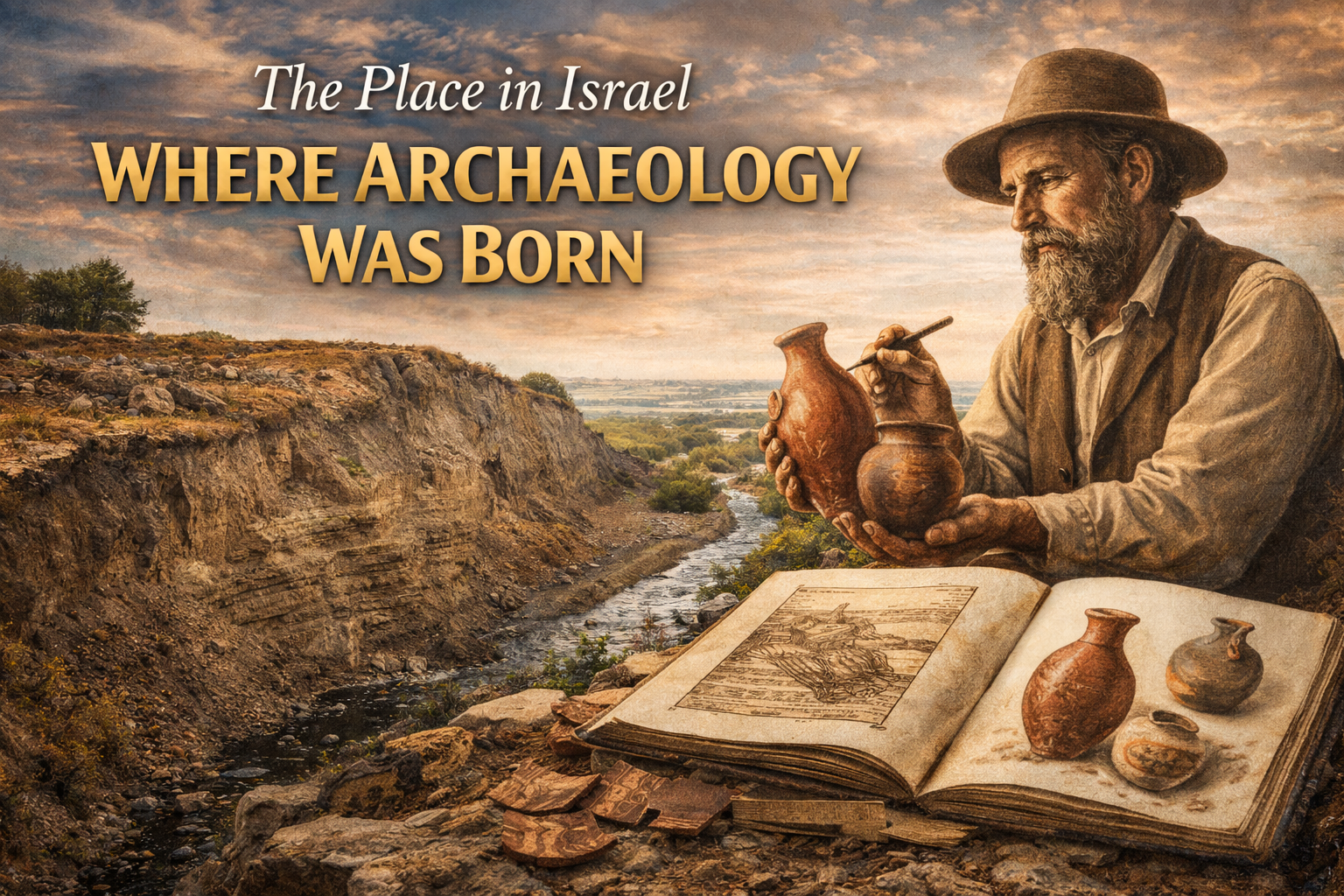
The Place in Israel Where Archaeology Was Born
Disclaimer: The video(s) shared in this post are produced by third parties. We may not endorse all views, beliefs, or content of the creators, but we share these resources because we believe they can be a blessing to our visitors.
There are places in the land of the Bible that are important because of the events that happened there. Then there are places that matter because of what they changed for everyone who came after. Tel el-Hesi is one of those places.
This site may not be as widely known as Jerusalem, Lachish, or Megiddo, but its significance is enormous. According to the video, this is the place where Flinders Petrie helped move archaeology into a more careful and scientific direction. More specifically, it is presented as the place where pottery chronology was born, a method that still shapes archaeological discussion today.
Why Tel el-Hesi Matters
The video explains that Tel el-Hesi is located about 16 miles from Gaza and became the setting for one of the most important turning points in archaeological history. After years of work in Egypt, Flinders Petrie came here in 1890 and began his first excavation in the Holy Land.
Petrie believed he was digging the biblical city of Lachish. That identification later turned out to be incorrect, but the mistake does not erase the importance of what happened here. In fact, the story is powerful partly because it shows both Petrie’s brilliance and his humanity. He made a major contribution to archaeology while also making a real interpretive error.
The larger point of the video is that Tel el-Hesi became the birthplace of a method. Petrie did not simply dig for impressive objects. He studied layers, pottery, and historical records together. That shift changed archaeology.
From Treasure Hunting to Scientific Method
In the early days, archaeology was often more about collecting artifacts than understanding the past. Petrie helped change that. At Tel el-Hesi, he worked with the natural advantages of the site. A stream had cut into the side of the mound and exposed a large section of its layers. Instead of digging only from the top, Petrie was able to study the exposed stratigraphy and compare the different levels directly.
That was a major breakthrough. He examined the pottery from each layer, noticed differences in style and form, and used those observations to help build a chronological sequence. In other words, he treated pottery as evidence that could help date the life of the site.
This may sound normal to us now, but it was groundbreaking at the time. The video emphasizes that this was the beginning of pottery chronology in the land of the Bible, and that it happened here at Tel el-Hesi.
The Bible and the Layers Together
One of the strongest themes in the video is that Petrie did not try to separate archaeology from the Bible. He used the Bible as a historical source alongside the physical evidence of the site.
That matters because modern discussions often act as though using the Bible makes archaeology less scientific. The argument in this video is exactly the opposite. It points out that in this early stage of the discipline, archaeology in the biblical world was deeply connected to the biblical record. Petrie looked at the layers of the mound and compared them to events described in Scripture.
He believed the city was Lachish, so he connected destruction levels and building phases with biblical events such as the conquest, the kingdom period, the Assyrian destruction, and the Babylonian destruction. Even though the site was later shown not to be Lachish, the method itself remained influential.
Petrie’s Important Mistake
One of the most interesting parts of this story is that Petrie was wrong about the site’s identity. Lachish was later identified elsewhere, at Tel ed-Duweir, and that identification became widely accepted.
Still, the video makes an important point: the mistake was not the fault of the Bible. The biblical record was not wrong. The archaeologist’s identification was wrong. That is a helpful reminder for modern debates. Archaeologists, like everyone else, can make incorrect conclusions. The existence of an error does not mean the method is useless, and it certainly does not mean the biblical record should be dismissed.
In fact, the video argues that this should make us more thoughtful, not more cynical. Archaeology is a human discipline. It can be insightful, rigorous, and valuable, but it is not infallible.
Why This Story Still Matters Today
This story matters because so many archaeological debates today still come back to chronology, pottery, and the relationship between material evidence and historical texts. If we want to understand those debates well, we need to understand where these methods began.
Tel el-Hesi reminds us that archaeology did not grow in opposition to the Bible. In this case, it grew in conversation with it. Petrie’s work here helped shape the field, and his attempt to connect archaeology with Scripture shows how closely the two were once linked.
The video also challenges the modern assumption that archaeology becomes more objective only when it ignores the Bible. On the contrary, historical archaeology is strongest when it takes written sources seriously and compares them carefully with what is found in the ground.
A Humbling but Helpful Lesson
The account of Tel el-Hesi is both inspiring and humbling. It is inspiring because it shows a major step forward in archaeological method. It is humbling because even the man often called the father of archaeology made mistakes.
That should not discourage us. It should encourage careful thinking. The past is not recovered by guesswork alone, nor by artifacts alone, nor by texts alone. It requires patient work, honest comparison, and a willingness to learn.
For believers, there is something encouraging here as well. The Bible was not pushed aside in the birth of biblical archaeology. It was part of the process. That does not mean every excavation proves every conclusion people want it to prove, but it does mean that Scripture belongs in the conversation.
Final Thoughts
Tel el-Hesi may not be the most famous site in Israel, but it stands as a landmark in the history of archaeology. This is where a major shift happened. This is where pottery chronology took shape. This is where one man’s close study of layers, artifacts, and Scripture helped reshape the field.
Even with Petrie’s mistake about the site’s identity, the larger contribution remains. Archaeology became more careful here. More structured. More historical. More attentive to sequence and context.
And that is why Tel el-Hesi deserves to be remembered, not just as an ancient mound, but as the place where archaeology in the land of the Bible took an important step into a new era.
Our church occasionally shares videos and resources created by others. While we value good teaching and helpful content wherever it may be found, sharing a resource does not mean we fully agree with or endorse all the theology, lifestyle, doctrine, or opinions of the content creators or their channels.
Discover more from Fannin County Seventh-day Adventist Church
Subscribe to get the latest posts sent to your email.


