
Biblical Archaeology, Writing, and Why the Word Still Stands: Reflections on Michael G. Hasel’s Tyndale Fellowship Lecture 2025
At the 2025 Tyndale Fellowship Biblical Archaeology Lecture, Dr. Michael G. Hasel delivered a thoughtful and timely presentation that moved well beyond archaeology alone. His lecture explored how confidence in the Bible’s historical reliability has been challenged over the last two centuries, how critical scholarship has often shifted biblical texts later and later in history, and how archaeology continues to bring important evidence back into the conversation. The lecture especially focused on the ivory comb inscription from Lachish, a discovery that has become highly significant in discussions about alphabetic writing, literacy, and the historical world of the Bible. :contentReference[oaicite:0]{index=0} :contentReference[oaicite:1]{index=1}
A Lecture About More Than Archaeology
Dr. Hasel began by reflecting on William Tyndale and the long struggle to place Scripture into the hands of ordinary people. He contrasted that earlier battle for access to the Bible with a modern challenge: not the physical removal of Scripture, but the erosion of confidence in its truthfulness. In his words, the stories and people of Scripture are often still printed in modern Bibles, yet many scholars now treat them as literary creations rather than historical realities. That concern shaped the rest of the lecture. :contentReference[oaicite:2]{index=2} :contentReference[oaicite:3]{index=3}
He traced how modern biblical scholarship, especially since the Enlightenment, increasingly questioned early authorship and early dating for the biblical text. One major argument behind those later dates was the assumption that widespread writing and literacy did not exist early enough for figures like Moses or the patriarchs to belong to a genuinely ancient written world. According to the lecture, this assumption helped fuel major theories that pushed biblical sources later and later, in some cases even into the Persian, Hellenistic, or Hasmonean periods. :contentReference[oaicite:4]{index=4} :contentReference[oaicite:5]{index=5}
The Ivory Comb From Lachish
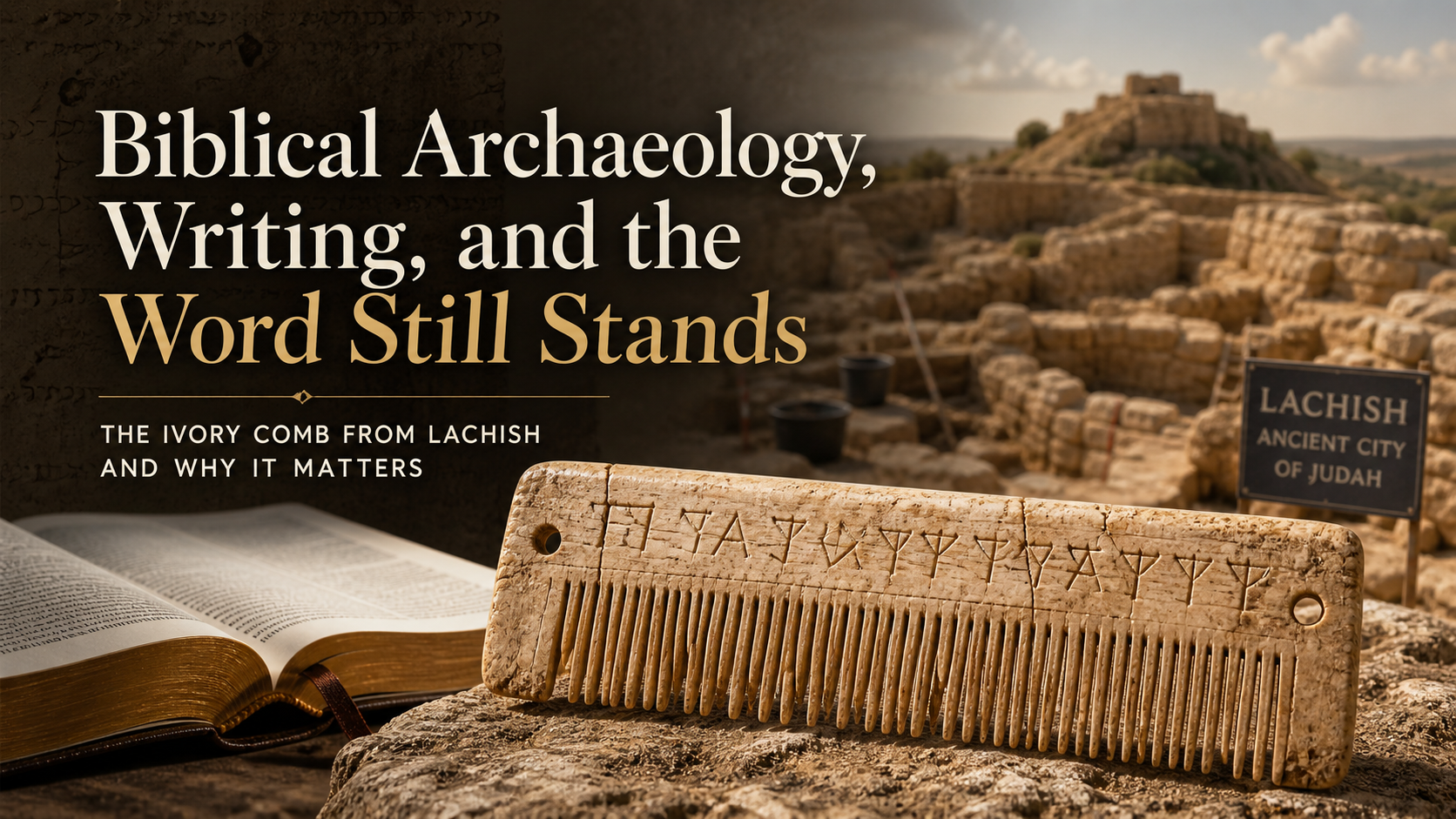
The heart of the lecture centered on a tiny object with a very large significance: an ivory comb discovered at Lachish. Dr. Hasel explained that the comb was found during the renewed excavations at the site and was first thought to be a simple bone object. Later analysis showed that it was actually made from elephant tusk ivory and had been carefully worked into a comb. What made the object extraordinary, however, was the discovery of an inscription scratched across its surface. :contentReference[oaicite:6]{index=6}
That inscription, as presented in the lecture, reads: “May this tusk root out lice of hair and beard.” It may sound simple, even ordinary, but that is exactly what makes it so compelling. This is not a royal boast or monumental inscription. It is a practical sentence written on an everyday object, describing its intended use. Dr. Hasel argued that this matters because it shows that alphabetic writing in Canaan was capable of expressing complete thought much earlier than many older theories allowed. :contentReference[oaicite:7]{index=7} :contentReference[oaicite:8]{index=8}
Why This Discovery Matters
One of the strongest points in the lecture was that this comb did not come from an isolated desert margin or an obscure mining outpost. It came from Lachish, one of the most important urban centers in Canaan. Dr. Hasel stressed that the object was found in a major site with a long history of temples, palaces, elite domestic structures, and later royal importance in Judah. That setting makes the inscription harder to dismiss as a random or marginal curiosity. :contentReference[oaicite:9]{index=9}
He also emphasized the material itself. Ivory was a luxury product that required long-distance trade, skilled craftsmanship, and elite demand. In other words, this was not a rough scratch on a rock in the wilderness. It was writing on a finely made prestige item. That combination of context, material, and inscription pushes back against the idea that early alphabetic writing was too primitive or too socially limited to support more serious literary activity. :contentReference[oaicite:10]{index=10}
Archaeology and the Question of Belief
As the lecture moved toward its conclusion, Dr. Hasel broadened the issue again. The comb matters, but not because faith rests on a comb. It matters because discoveries like this remind us that the ancient world of the Bible was real, literate, and far more complex than many skeptical reconstructions have allowed. He suggested that if people in the Middle Bronze Age could write complete alphabetic sentences on practical objects, then it becomes much harder to dismiss the possibility of much earlier and much richer written traditions behind the biblical text. :contentReference[oaicite:11]{index=11}
One of the most memorable parts of the lecture came near the end, when Dr. Hasel described sharing news of the comb discovery in Jerusalem during a missile alert. As people gathered in a shelter while sirens sounded outside, he reflected on Isaiah 40:8: “The grass withers, the flower fades, but the word of God stands forever.” That was the true point of the lecture. Archaeology can illuminate, confirm, and sharpen our understanding, but in the end the deeper question is whether we still believe the One who gave the Word. :contentReference[oaicite:12]{index=12}
Final Thoughts
This lecture was a powerful reminder that biblical archaeology is not merely about objects, dates, or academic debate. It is about truth, memory, and confidence in the reliability of Scripture. The ivory comb from Lachish may be small, but it speaks into a very large conversation. It tells us that the ancient world of Canaan knew writing earlier than many had assumed. It tells us that archaeology still has much more to reveal. And for believers, it offers one more reason to trust that the Bible is grounded in the real world of history.
In a time when many voices try to reduce Scripture to late fiction or symbolic tradition, this lecture pointed in another direction. It encouraged listeners not only to pay attention to the evidence, but also to ask the more personal question Dr. Hasel left hanging in the room: Do we still believe?
Disclaimer: The video shared in this post was produced by a third party. We may not endorse every view, belief, or conclusion expressed by the speaker, but we are sharing this resource because we believe it offers thoughtful material that may benefit our readers.
Our church occasionally shares videos and resources created by others. While we value good teaching and helpful content wherever it may be found, sharing a resource does not mean we fully agree with or endorse all the theology, lifestyle, doctrine, or opinions of the content creators or their channels.
Discover more from Fannin County Seventh-day Adventist Church
Subscribe to get the latest posts sent to your email.


