
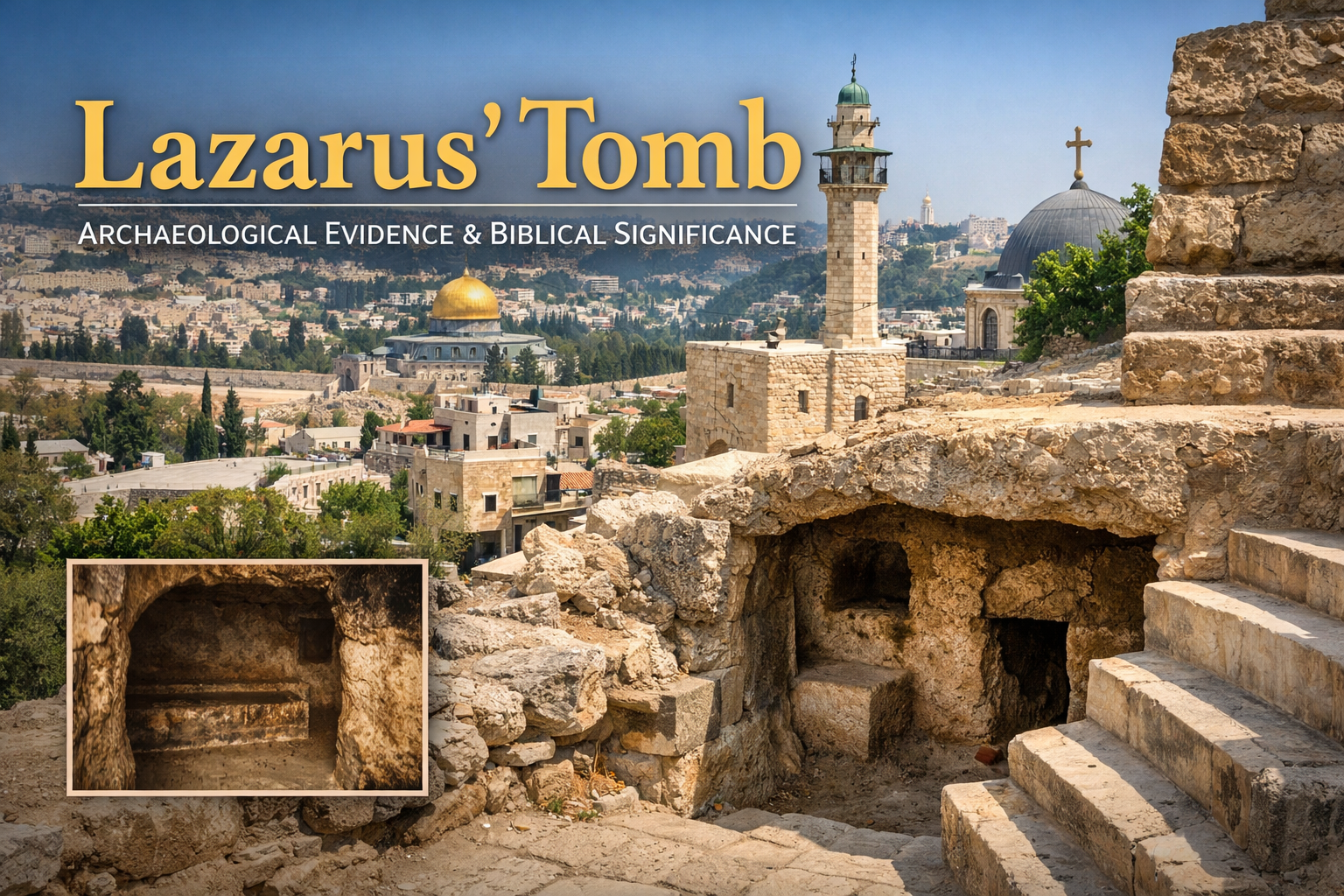
Lazarus of Bethany: Archaeological Evidence for the Tomb of Lazarus
Disclaimer: The video(s) shared in this post are produced by third parties. We may not endorse all views, beliefs, or content of the creators, but we share these resources because we believe they can be a blessing to our visitors.
Few moments in the Gospels are as moving as the raising of Lazarus. In John 11, Jesus arrives at Bethany after Lazarus has been dead for four days. He comes to a tomb cut into the rock, commands the stone to be removed, and then calls Lazarus out of the grave. It is one of the clearest signs of Christ’s authority over death and one of the most hope-filled scenes in all of Scripture.
That naturally raises an important question. Is there any archaeological reason to believe the traditional tomb of Lazarus is authentic?
The video above explores that question by traveling to modern al-Azariya, the town whose name preserves the memory of Lazarus. Located on the eastern slope of the Mount of Olives, this area matches the biblical setting of ancient Bethany. The traditional tomb has been remembered and visited for centuries, and the archaeological evidence surrounding it gives strong reasons to take the site seriously.
The Biblical Setting of Bethany
John 11 tells us that Lazarus, Martha, and Mary lived in Bethany, a village near Jerusalem. The Gospel places Bethany less than two miles from the city, on the eastern side of the Mount of Olives. That detail matters because archaeology has identified a village in exactly that location, on the road leading up from Jericho toward Jerusalem.
Excavations carried out in the mid-20th century uncovered remains of the ancient village of Bethany west of the traditional tomb. The site showed occupation during the very period connected to the life of Jesus and Lazarus. In other words, the town itself is not legendary or symbolic. It is rooted in a real place, in a real landscape, at the right time in history.
A Tomb That Was Never Forgotten
One of the most interesting points in the investigation is that the tomb of Lazarus was not really “excavated” in the usual sense. That is because it was never truly lost. While many biblical locations were buried, forgotten, and later rediscovered, the tomb of Lazarus appears to have remained a place of memory and veneration through the centuries.
That matters more than it may seem at first. If local believers continued to remember and point out the tomb from the earliest centuries, then the tradition is not a late invention. It is an ancient memory preserved by the community that lived there.
Early Christian testimony supports this. By the fourth century, church historian Eusebius could already say that the place of Lazarus was still being shown. That means the identification was already old in his day, only a few centuries removed from the Gospel events themselves.
The Tomb Matches John’s Description
The Gospel of John describes Lazarus’ tomb as a cave with a stone laid across its entrance. The traditional tomb in Bethany fits that description remarkably well. The site preserves an ancient rock-cut cave tomb, and evidence at the location shows that its entrance was modified over time as later generations built around it.
Today, visitors descend by stairs from street level into the tomb area, but the original entrance into the cave can still be traced in the rock. The cave itself, the cut stone features, and its placement just outside the village all fit naturally with what we would expect from a first-century burial place.
So while the site has certainly been altered by centuries of devotion, construction, and rebuilding, the core of the tomb remains ancient and consistent with the biblical account.
The Surrounding Archaeology Is Important
The strongest case for the tomb is not based on the cave alone. It is based on the full context.
West of the tomb, archaeologists identified the village of Bethany. Around the tomb, there are other burial features from the same general period. Above and around the site, there is a long sequence of later Christian buildings that commemorate the event. Together, these details form a much stronger argument than any one piece of evidence by itself.
The traditional tomb is not standing in isolation, disconnected from the rest of the setting. It belongs to a larger archaeological and historical context that makes sense.
The Stack of Churches Over the Site
One of the most striking discoveries at Bethany was the sequence of churches built over the area. Archaeologists found layer upon layer of commemorative construction. The remains showed a long history of Christian remembrance at the site, with multiple churches built in succession over the centuries.
This repeated pattern says something important. Christians did not randomly choose this location much later and begin honoring it out of convenience. Instead, generation after generation kept returning to the same place. That kind of continuity is exactly what we would expect if the event itself had never been forgotten.
The site was important enough to preserve, rebuild, and honor across changing periods of history. That kind of persistence is one of the strongest marks of an authentic sacred memory.
Why This Tomb Was Remembered
John 11 helps explain why the memory of Lazarus’ tomb would have endured. After Jesus raised Lazarus from the dead, many people who witnessed the event believed in Him. That means the miracle was not experienced in private. It happened in a local community where the memory of the event would have spread quickly and remained powerful.
If a man well known in Bethany was raised after four days in the grave, and if many locals came to faith because of it, then it makes perfect sense that the tomb would become a place remembered by believers from the very beginning.
In that light, the continued identification of the tomb is not surprising at all. It is exactly what we would expect.
Lazarus and the Hope of Resurrection
The most meaningful part of the Lazarus account is not only that Jesus raised one man from the dead. It is that the event points beyond itself. When Martha speaks with Jesus, she already believes in the future resurrection. Jesus then answers with one of the most powerful statements in the Gospel: “I am the resurrection and the life.”
That changes everything.
The raising of Lazarus is not just about one family in Bethany. It is about the identity of Christ. Jesus does not merely teach resurrection. He embodies it. He does not simply comfort mourners with abstract hope. He stands before a grave and commands life into the dead.
That is why the tomb of Lazarus matters. It is not important because it is a famous monument. It is important because it points to the One who has power over death itself.
An Archaeological Monument of Hope
In the end, the traditional tomb of Lazarus deserves to be taken seriously. The location fits the biblical description of Bethany. The village around it belongs to the correct period. The tomb itself matches the type of burial place described in John 11. Early Christian testimony shows the place was remembered very early. And the long sequence of churches built over the site demonstrates that the memory of what happened there was preserved through the centuries.
No archaeological site can force faith. But some places do something precious. They remind us that the Bible is not set in a mythical world. It speaks about real towns, real people, real tombs, and real acts of God in history.
The tomb of Lazarus stands as one of those places.
And more than that, it stands as a witness to Christian hope. Lazarus died, and Lazarus was called back from the grave by Jesus Christ. For believers today, that same Jesus remains the resurrection and the life. The God who called Lazarus out of the tomb is still the One who promises life to all who trust in Him.
That is why this site still matters. Not because the stone and cave themselves save anyone, but because they point to the Savior who does.
Our church occasionally shares videos and resources created by others. While we value good teaching and helpful content wherever it may be found, sharing a resource does not mean we fully agree with or endorse all the theology, lifestyle, doctrine, or opinions of the content creators or their channels.
Discover more from Fannin County Seventh-day Adventist Church
Subscribe to get the latest posts sent to your email.


