
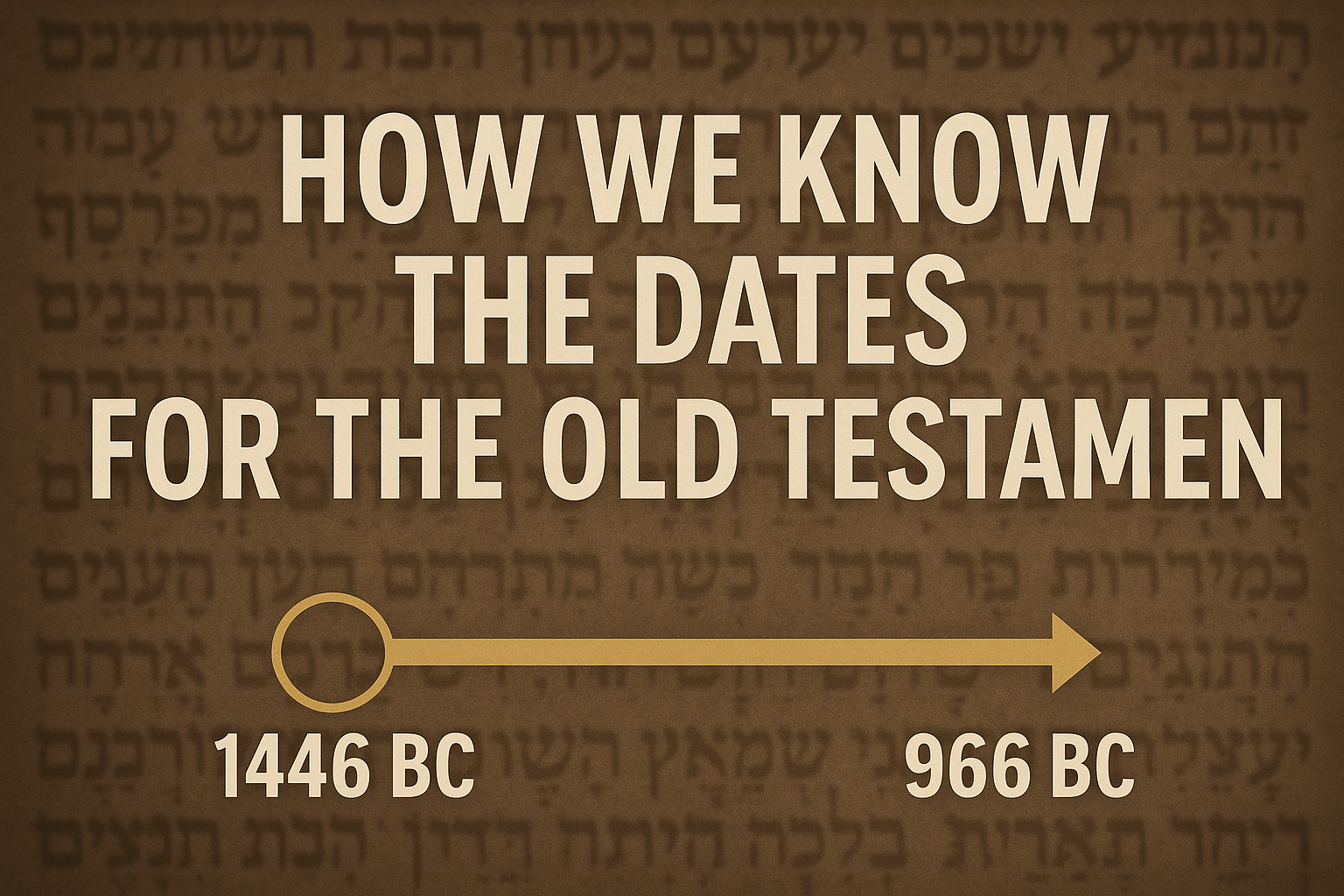
How We Know the Dates for the Old Testament
The chronology presented in the Old Testament is remarkable: it provides a sequence of years, reigns, and events. But a key question remains: how do we anchor those biblical dates to the modern Gregorian calendar—so that we understand events like the Exodus or the reign of King Solomon in terms of “BC” years? This video explores the archaeological and historical evidence that makes that connection possible.
Linking Ancient Calendars to Our Calendar
One of the biggest challenges for biblical chronology is converting ancient markers into our BC/AD system. The video explains how archaeologists travelled to places like Nineveh (modern Iraq) and unearthed records from the Assyrian empire—such as eponym‑lists and solar eclipse entries—that provide fixed dates. For example, on June 15 763 BC a solar eclipse recorded in Assyria can be precisely dated. From that point, historians can anchor a broad span of years backwards and forwards. (In the video this is shown in the context of the Assyrian king Sennacherib’s campaigns).
The Biblical Anchor: 1 Kings 6:1
The Scripture in 1 Kings 6:1 states: “In the 480th year after the Israelites came out of Egypt, in the fourth year of Solomon’s reign, in the second month, he began to build the temple of the Lord.” The video shows how this verse becomes meaningful once the “fourth year of Solomon” is anchored in a specific year (e.g., roughly 966 BC in the reconstruction). Then adding 480 years gives a date for the Exodus (around 1446 BC in this view). From there the whole timeline of Israel’s kings, prophets and events can be placed into BC terms.
Why This Matters
- It shows that the Bible’s chronology is historically coherent and not just theological sequence.
- It gives believers confidence that biblical events are real, dated, and grounded in history—not only in faith.
- It helps us understand how prophecy, history and archaeology intersect—e.g., a solar eclipse recorded in Assyria becomes a link in the chain.
A Faith‑Strengthening Discovery
While many assume biblical dates are vague or symbolic, this video demonstrates that through careful archaeology, ancient chronicle records and astronomy we *can* identify particular years, reigns and synchronisms. That means when the Bible speaks of Solomon, the temple, the Exodus, and the Assyrian invasions—it is speaking of real time and real events.
📺 Watch the full video: https://www.youtube.com/watch?v=3DJtVlLRMGw
Discover more from Fannin County Seventh-day Adventist Church
Subscribe to get the latest posts sent to your email.


