
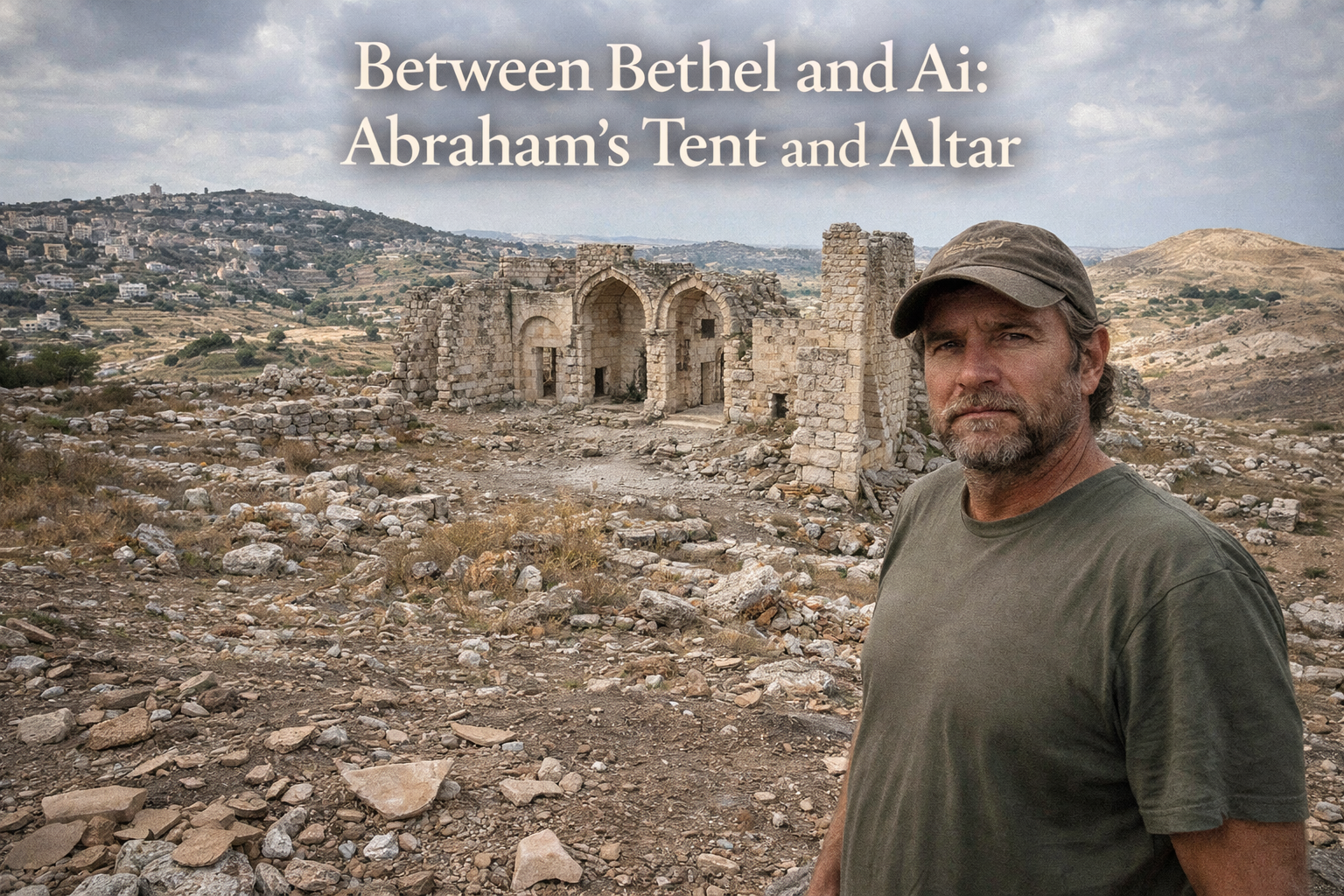
Bethel, Ai, and Abraham’s Altar: Finding a Forgotten Biblical “In-Between” Place
This video follows a father-and-son road trip from Amman to Jerusalem and into the West Bank to visit some extremely important Old Testament locations that most people never see. Because of modern conflict and restricted access, many biblical sites in Palestinian Authority areas are rarely visited and have not been researched much in recent decades.
The focus of the journey is the region just north of Jerusalem, where two well-known biblical cities sit close together: Bethel (modern Beitin) and Ai. Between them is a ridge with early Christian ruins that point to something even more specific: the place where Abraham pitched his tent, built an altar, and called on the name of the Lord.
Why These Sites Are So Hard to Visit Today
Early in the video, the creator explains why places like Bethel and nearby biblical sites have become “forgotten” to many modern travelers. Some roads and entrances are blocked, and the region can be unpredictable due to security situations. That restriction has also made it difficult for many Israeli scholars to access and excavate key locations over the years.
The result is that a lot of what was known in the late 1800s and early 1900s is less talked about now, even though these are major biblical settings.
Bethel Identified: Beitin and the “House of God”
The journey leads to the Palestinian town of Beitin, identified with high confidence as biblical Bethel. The video points out a key detail that matters in historical geography: the preservation of the ancient name. “Beitin” and “Bethel” both carry the meaning “House of God,” just in different languages.
The transcript also references major excavation work beginning in 1934 by archaeologist William Foxwell Albright, who argued strongly that Beitin matches the biblical city. The evidence includes how the occupational history of the site aligns with the periods Bethel appears in both biblical and extra-biblical sources.
Why You Don’t “See” the Excavations
A really practical part of the video is the explanation of why visitors often can’t find the dig areas. After excavations, many squares were refilled, and the land continued to be used by local residents. So even if a site was heavily excavated, it may look like normal fields today.
The creator explains how he finally pinpointed the excavation zones by using the excavation report, a recognizable headquarters building shown on the site plan, old photos, and help from local residents who remembered the early digs.
From Bethel to Ai: Two Cities That “Lock In” the Geography
Once Bethel is located, identifying Ai becomes much easier. Scripture places Bethel and Ai close together, describing them as being west and east of a specific camping area.
The video walks the viewer from Bethel eastward toward the ridge and the ancient mound associated with Ai, showing how the geography matches the biblical description: two fortified Bronze Age cities with a specific “in-between” place.
The Key Verse: Abraham’s Tent Between Bethel and Ai
The heart of the episode centers on Genesis 12:8, where Abram (Abraham) is said to have pitched his tent with Bethel on the west and Ai on the east, building an altar and calling on the name of the Lord.
The argument is simple: if we know where Bethel is, and we can identify Ai’s mound nearby, and there is a single clear ridge/location between them, then the “in-between” spot described in Genesis becomes geographically meaningful, not vague.
The video also connects this to Genesis 13, where Abraham returns to “the place between Bethel and Ai where his tent had been earlier” and where he built an altar the first time.
Early Christians and the Church Ruins
A major supporting detail in the video is that early Christians identified and commemorated biblical places. The ruins of a large church north of Jerusalem (about 12 miles) become a “compass” for understanding the region and its biblical memory.
The transcript references early Christian writers and traditions that connect this area to key patriarch stories, and explains why a church would be built in a place remembered for Abraham and Jacob.
Jacob’s Dream, Bethel’s Name, and a Family “Holy Place”
The video links Abraham’s campsite with Jacob’s later experience in Genesis 28, where Jacob sleeps on a stone, dreams of a stairway to heaven with angels ascending and descending, and calls the place Bethel (“House of God”).
The point made is that the promises spoken to Abraham and Jacob in this region share the same themes: the land, descendants “like the dust of the earth,” and blessing that reaches far beyond one family.
Why This Still Matters
The video doesn’t present this as archaeology trivia. It’s about biblical context and memory. Standing in the land changes how people read these stories. It turns place names into real geography, and it connects faith to a specific historical setting.
The creator ends by tying Jacob’s stairway imagery to the New Testament, noting how the “way” between heaven and earth is ultimately fulfilled in Christ, and how the patriarch stories are meant to point beyond themselves.
Disclaimer
Disclaimer: The video(s) shared in this post are produced by third parties. We may not endorse all views, beliefs, or content of the creators, but we share these resources because we believe they can be a blessing to our visitors.
Our church occasionally shares videos and resources created by others. While we value good teaching and helpful content wherever it may be found, sharing a resource does not mean we fully agree with or endorse all the theology, lifestyle, doctrine, or opinions of the content creators or their channels.


