
Searching for the Earliest Mention of the God of Israel, “Yahweh”
The name of the God of Israel, Yahweh, sits at the center of the Old Testament story. It appears thousands of times in Scripture, but many people still ask a simple question: Do we ever see the name “Yahweh” outside the Bible in ancient history?
In this video, Joel Kramer (Expedition Bible) explores what may be the oldest known archaeological mention of Yahweh ever discovered, preserved in an Egyptian inscription dating to the late 15th century BC.
Why This Question Matters
The Bible presents Yahweh not as a vague concept, but as the living God who acted in real history, among real places and real nations. Archaeology cannot replace faith, but it can sometimes provide meaningful context and “external echoes” of the biblical world.
A Surprising Lead in an Egyptologist’s Book
Joel explains that he first learned about this inscription while reading work by a well-known Egyptologist, Donald Redford. Redford discussed a temple site called Soleb, located in modern-day Sudan (though it was part of Egypt’s sphere in ancient times).
At Soleb, Pharaoh Amenhotep III built a temple and recorded a list of foreign peoples and enemies. In that context, scholars noticed a phrase that appears to contain the divine name Yahweh.
What the Inscription Says
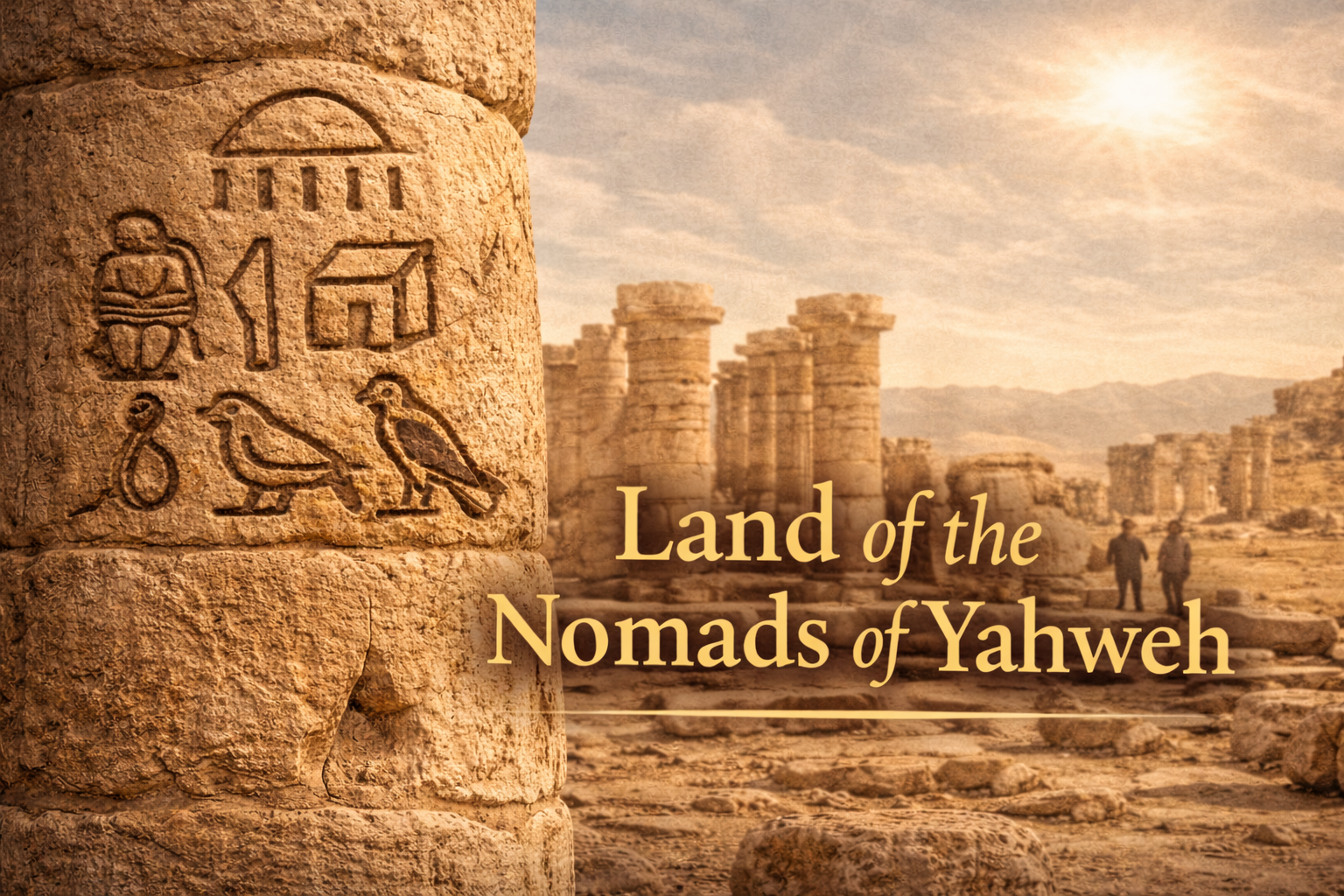
The inscription is written in Egyptian hieroglyphs. Joel walks through how it is read:
- A symbol indicating land
- The term Shasu, commonly translated as nomads
- A set of signs that sound out a name understood as Yahweh
Put together, the phrase is presented as: “Land of the nomads of Yahweh.”
If the reading is correct, this would place the name Yahweh in an Egyptian inscription more than 3,400 years ago, near the end of the 15th century BC.
Connecting the Dots With the Wilderness Period
One of the most interesting points in the video is the historical “fit.” The Bible describes Israel in the wilderness as a people on the move, living in tents, and journeying through desert regions for 40 years.
From an Egyptian viewpoint, a group identified as nomads connected with a particular deity makes sense as a label. Joel suggests that this is exactly the kind of wording we would expect if Egypt had heard about, or had contact with, a nomadic group associated with Yahweh during that time.
Going to Sudan to See It Firsthand
Rather than stopping at a reference in a book, Joel travels to Sudan to visit the temple at Soleb in person. After a long journey across the Nile region and into the desert, he finds the pillar and points out the inscription.
Even though the particular text is not as well-preserved as some nearby inscriptions, it remains significant because of what it appears to record: an early, external mention of Yahweh connected to a nomadic people group.
A Simple Takeaway
The big takeaway of the episode is not “archaeology replaces Scripture,” but that archaeology can sometimes illuminate the setting of Scripture and remind us that biblical events happened in real history.
If this inscription truly reflects “nomads of Yahweh” in the late 15th century BC, it becomes a fascinating piece of background evidence that lines up naturally with the Bible’s description of Israel’s wilderness years.
Disclaimer
Disclaimer: The video(s) shared in this post are produced by third parties. We may not endorse all views, beliefs, or content of the creators, but we share these resources because we believe they can be a blessing to our visitors.
Our church occasionally shares videos and resources created by others. While we value good teaching and helpful content wherever it may be found, sharing a resource does not mean we fully agree with or endorse all the theology, lifestyle, doctrine, or opinions of the content creators or their channels.


