
Note: This article is a faith-leaning summary and discussion based on the video linked below. Some archaeological identifications and timeline arguments in the video are debated among scholars. Where the video makes specific claims, I present them as the video’s claims, not as proven fact.
Watch the video
The video you shared makes a bold argument: that the book of Genesis lines up with a specific window of Egyptian history, and that archaeology in the Nile Delta may preserve a “fingerprint” of Joseph’s rise to power.
The speaker builds the case in three layers: (1) what Genesis says Joseph did politically during the famine, (2) how some ancient Egyptian sources describe the rise of the Hyksos, and (3) what has been excavated at Tell el-Dab’a (often identified with ancient Avaris).
1) The core Bible storyline the video focuses on
In Genesis 41–47, Joseph goes from prisoner to the top administrator under Pharaoh. The famine hits, and Joseph manages storage and distribution of grain. The key point the video stresses is this: Joseph does not just “hand out food.” He runs a national crisis response that ends up reshaping Egypt’s economy.
The video highlights Genesis 47 in particular, describing a progression:
- Money runs out as people buy grain.
- Livestock becomes payment when money is gone.
- Land and servitude follow as the famine continues.
In short, the speaker reads Genesis 47 as a major centralization event where Pharaoh ends up owning the land and the system becomes highly controlled. The video calls this the “political thriller” side of Joseph’s story.
2) “Hyksos” and the idea of a takeover without a war
Next, the video connects Joseph’s era to a period many history books call the Second Intermediate Period, when a foreign-ruled dynasty (often called the Hyksos) rose in the north of Egypt.
The argument in the video is basically: if there is little or no archaeological evidence for a violent conquest in the Delta layers tied to the Hyksos rise, then maybe the change in power was administrative and economic rather than military.
The speaker frames the Hyksos story as something like “they didn’t invade, they took control through systems.” Whether a listener agrees or not, that is the bridge the video uses to connect Joseph’s famine policy with a later-seen political shift.
3) The “name clue”: a title that sounds familiar
One of the video’s biggest moves is linguistic. It says an ancient tradition records an early Hyksos ruler name (given in Greek form) that the speaker connects to a Semitic title meaning “governor.” Then it points to Genesis 42:6, where Joseph is described as governor over the land in Hebrew.
The idea is: if the recorded “name” is actually a title, and the Bible uses a matching title for Joseph, then the records could be talking about the same role and possibly the same figure.
Important note: this kind of argument can be interesting, but it’s also the kind of thing scholars debate heavily because transliterations across languages and centuries can be tricky.
4) The archaeological centerpiece: Avaris (Tell el-Dab’a)
The video then moves to archaeology at Tell el-Dab’a in the Nile Delta, associated by many with ancient Avaris. It describes findings that, according to the speaker, fit a “Semitic elite presence” in the Delta:
- Architecture described as non-traditional Egyptian in style (more Levantine / Syrian in pattern).
- A large high-status compound suggesting wealth and authority.
- A cemetery pattern the speaker interprets as a powerful clan structure.
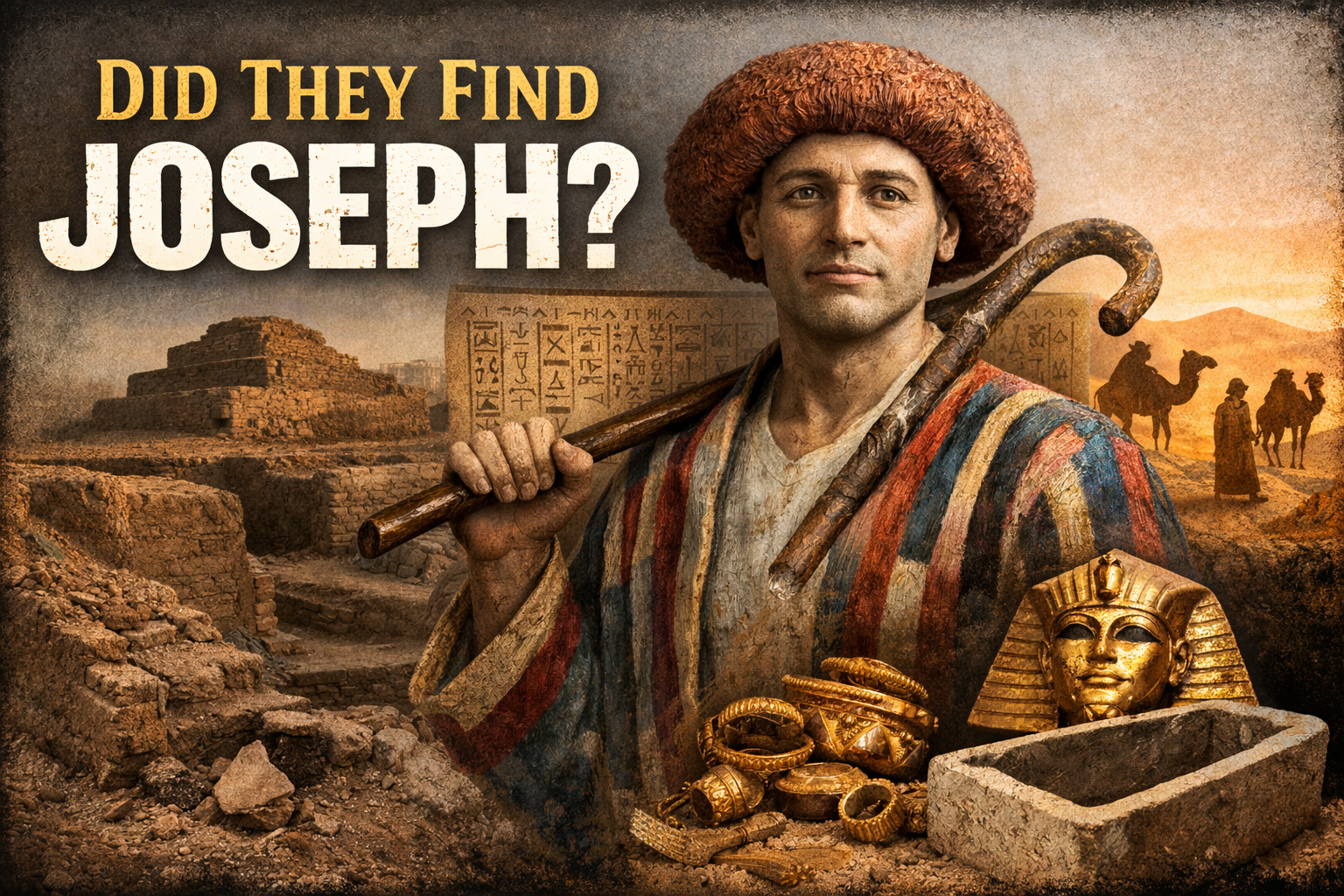
- A prominent statue portrayed as a Semitic-looking official (based on art-style cues).
The video claims the statue shows unusual details like a shepherd-related symbol and faint traces of colored paint on clothing. The speaker connects this to the biblical Joseph narrative (including the famous “coat” tradition), using it as a dramatic “this is him” moment.
Here it’s worth slowing down: archaeology can show us people-groups, wealth, foreign presence, and cultural blending, but identifying one exact individual by name is much harder. The video is making a strong identification claim, not merely a “possible context” claim.
5) The empty tomb argument
Another key moment: the video describes an elite tomb that, according to the speaker, was found empty of remains. It then connects that to Exodus 13:19, which says the Israelites carried Joseph’s bones with them when leaving Egypt.
The reasoning is: grave robbers usually take valuables and leave bones, but if bones are missing too, it could point to deliberate removal by family. The video treats this as a striking “fits the Bible” detail.
Again, this is suggestive rather than conclusive. An empty burial space can have multiple explanations. The video’s point is that Exodus provides a storyline that could explain one particular kind of “missing remains” scenario.
6) The warning at the end: blessing that becomes a cage
The last portion of the video shifts from investigation into application. It argues that Joseph’s success, while saving lives, built a centralized system that could later be used for oppression. This becomes the “dark irony” theme: a wise solution can still have long-term consequences.
The speaker then applies it to spiritual life, basically saying: seasons of comfort can become traps if we refuse to move when God calls us forward.
Key passages referenced in the video
- Genesis 47 (famine economics, land transfer, centralization)
- Genesis 42:6 (Joseph as “governor over the land”)
- Exodus 13:19 (Joseph’s bones carried out of Egypt)
- Genesis 50:20 (God turning evil for good, with a cautionary twist in the video)
So… did they “find Joseph”?
The video makes a confident case that several data points line up in a compelling way: a Semitic presence at the right kind of site, elite status signals, cultural clues, and a biblical explanation for an empty burial.
The cautious way to phrase it is: the archaeology may support a plausible historical setting consistent with parts of the Genesis story, while the “this is definitely Joseph” conclusion goes beyond what archaeology can usually prove on its own.
Conclusion
If you watch the video as an argument, it’s trying to do two things at once: (1) show that Genesis fits a real ancient world context more than skeptics admit, and (2) remind believers that God’s providence can work through messy politics and long timelines.
Whether you end up fully convinced or not, it’s a good prompt to re-read Genesis 41–47 slowly, and to notice how Scripture presents Joseph as both a faithful man and a powerful administrator in a complicated world.
Disclaimer: This post is for educational and devotional discussion only. Archaeological interpretation and ancient chronology are complex fields with multiple viewpoints. Always consult primary excavation reports and a range of scholarly perspectives when evaluating specific historical identifications.


